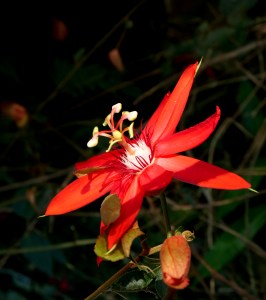
The New Year brought me to Costa Rica for a short reboot. Hoping to start 2019 on a clear and heart-felt path. While most of my adventures have to do with nature, conservation and wildlife, this trip is focused on health and well-being. However, that hasn’t stopped my curiosity and desire to explore the natural world around me. Granted, I know very little about Costa Rican biodiversity, so the photos below have only the simplest of descriptions.
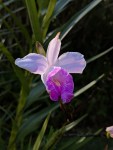
A few orchids:
Orchid. Copyright: Greg Joder.
Orchid. Copyright: Greg Joder.
Orchid. Copyright: Greg Joder.
Orchid. Copyright: Greg Joder.
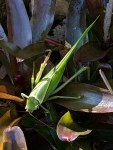
A few insects:
Mantis. Copyright: Greg Joder.
Robberfly. Copyright: Greg Joder.
Butterfly. Copyright: Greg Joder.
Katydid. Copyright: Greg Joder.
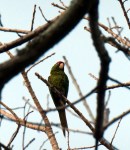
I did not have my good DSLR, so the few bird photos I’ve taken so far are not that great:
2018 was an an interesting year in terms of wildlife adventures. Early on there was time on Operation Milagro, working with Sea Shepherd in their efforts to save the vaquita from extinction. Later in the year I was again onboard a Sea Shepherd ship on Operation Treasured Islands, a campaign in support of Mexican biologists studying everything from plankton and plastics to pacific mantas and Hammerhead sharks. As with previous stints with the organization, one of my main tasks was drone operator, as well as deck crew.
Most of the year I was home in Tucson keeping my eyes open for interesting wildlife and maintaining my own set of 10 camera traps. I also continued my informal, long-term (4+ years now) wildlife monitoring project at the The Appleton-Whittell Research Ranch of the National Audubon Society. This project also uses approximately 10 camera traps set up in strategic locations, such as water sources and wildlife trails in order to document what species may be present or just passing through the area.
In both cases, my cameras have captured fun videos and images of desert tortoises to Mountain lions.
Here’s to hoping 2019 brings more wildlife beauty and conservation moments and opportunities. Happy New Year!
This trail cam capture was a fun surprise, a band of white-nosed coati foraging in a creek-bed. I set up the cameras about two weeks earlier, hoping to catch bears or mountain lions. I was happily surprised to see the cameras had captured the action of this band of coati as they worked their way down the creek. Pay close attention to the youngsters as they climb up and down trees and explore:
I don’t want to mislead everyone that my blog is all about trail camera captures. It is much more than that, given time. Currently, however, trail cameras have been a focus of my outdoor life (I’m not a hunter, but rather want to protect wildlife). I have other adventures in mind that will not involve trail cameras. I hope you’ll stick with me to see those adventures. In the mean time, I have more trail camera action to share with you. First, is a video of scouting a new location to set up a couple trail cameras:
Second are two videos that represent patience and luck when choosing a trail camera location.
The pollinator garden in my yard has been a pretty good place for Monarch butterflies. So far this summer I’ve counted a couple dozen Monarch caterpillars, a number of chrysalis’s and have seen about 15 butterflies successfully emerge. I was able to catch some of the action.
This little Broad-billed Hummingbird is likely the same one that built a nest in my patio last summer. Either way, she was able to successfully fledge two youngsters. There were plenty of hanging-plant options on which to build her nest, but she chose the green hook.
During her time incubating the eggs and feeding the nestlings the temperature in the patio was between 100 and 111 degrees (38 to 44 c.). She had her work cut out for her.
Here she is incubating her eggs:
Here she is feeding her kids a few days before they fledged:
Yesterday I made the hike out to check on two camera traps I have set up in a wash in the Sonoran Desert. This is the same wash where my cameras captured three mountain lions when the cubs were nearing a year old (Second video below).
The following video was captured just last week. I’m so happy to see they are alive and well!
It’s that special time of year in the Sonoran Desert when the Lesser Long-nosed bats return to the region. If you live where the bats forage and you leave hummingbird feeders up at night, you will know these bats have arrived by the evidence of empty feeders and sticky sugar water left on the ground in the morning. They are sloppy eaters. The Lesser Long-nosed bat is a nectarivore and feeds on the blooms of Saguaros, cardón cactus, agave and other night-blooming cacti.
I recently set up one of my motion-activated wildlife cameras to catch these endangered mammals in action. First, here’s a video of the bats feeding from a flower on a night blooming cactus in my yard:
And here is a video of them feeding from a hummingbird feeder I set in my yard just for the bats:
The little female Broad-billed Hummingbird continues to incubate her two eggs. She also performs a lot of nest maintenance each day, adding more material or adjusting what she already has. In order to capture still images of her I set up my DSLR on a tripod with telephoto and on time-lapse, shooting one photo every minute. Here are three of the best captures:






 My Earth